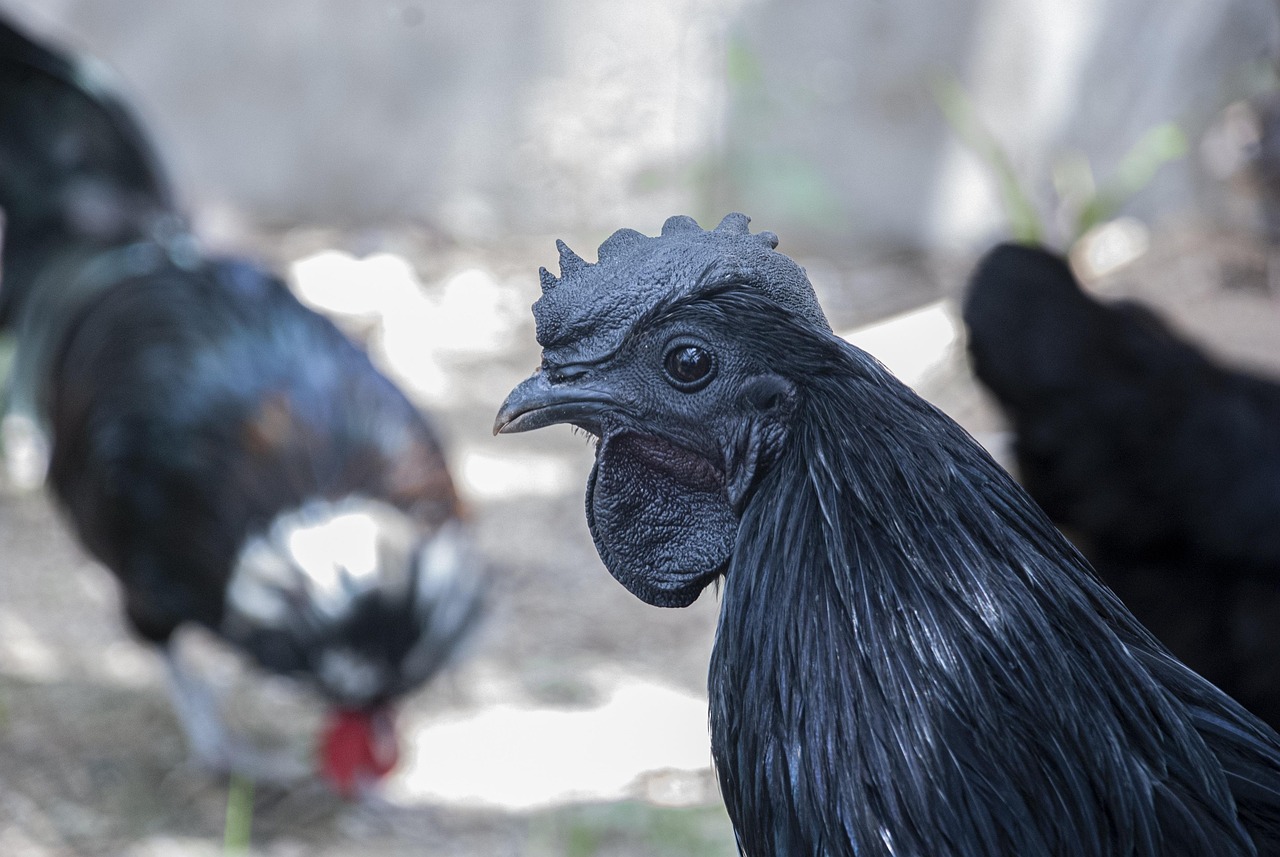
Kadaknath is the only Indian chicken breed most people can name on sight, and it is because of the colour. The bird is black — not just the feathers, but the skin, the meat, the bones, and the organs. Cut into one and it is dark grey-black all the way through.
The colour is a genetic trait called fibromelanosis: an excess of melanin deposited through the connective tissue. It is not a defect and it is not a marketing gimmick. A handful of breeds worldwide carry it, and Kadaknath is India's.
Where it comes from
The breed is native to the Jhabua and Dhar districts of Madhya Pradesh, where it has been raised by Bhil and Bhilala communities for generations. It carries a Geographical Indication tag tied to that region.
It was, for a long time, a local bird with a local reputation. Demand outside those districts is relatively recent, and it has grown faster than supply — which is the whole story behind the price.
Why it costs what it costs
Kadaknath is slow. A commercial broiler reaches table weight in about forty days. A Kadaknath takes months, and finishes smaller — a mature bird is well under the weight of a broiler processed at six weeks.
It also lays modestly, somewhere in the region of eighty to a hundred and twenty eggs a year against well over two hundred from a commercial layer. Fewer eggs means fewer chicks, and fewer chicks means the breed cannot be scaled quickly even when demand is there.
So you are paying for time and for scarcity. Anyone selling Kadaknath at broiler prices is not selling Kadaknath.
The nutrition claims, honestly
Kadaknath meat is genuinely leaner than broiler, with less fat and a higher proportion of protein, and the melanin content gives it a real antioxidant load. Those findings are consistent across the published work.
It is also credited with a long list of therapeutic properties that go well beyond what anyone has actually demonstrated. We are not going to repeat those. It is a lean, dense, strongly flavoured bird raised slowly. That is enough.
How it does in Goa
Well, on the whole. Kadaknath is a hardy backyard bird bred for a hot, dry interior, and it forages hard, which suits open-range rearing here.
The monsoon is the real test — not the heat, but the wet. Damp litter is what causes losses in Goa, in any breed. Kadaknath handles it as well as any native bird we raise, provided the housing is dry and the stocking density stays low. Get those two wrong and no breed will save you.
Cooking it
Treat it as you would any slow-grown desi bird, not as a broiler. The meat is firm and needs time — a long, gentle braise or a proper curry rather than a quick fry. Rushed over high heat it will simply be tough.
The colour holds through cooking. It is worth warning anyone at the table who has not seen it before.
Questions about any of this?
Ask us on WhatsApp