"No antibiotics" is easy to print on a label and hard to actually run a farm on. It is not a box you tick at the start of a batch. It is a set of things you have to keep doing, and the day you stop doing them the birds tell you.
There are three, and none of them can be swapped for either of the others.
One: clean water, every day
Water is where most of it goes wrong. Drinkers are warm, they are wet, and birds put their beaks in them all day. A biofilm forms inside the lines within days and it becomes the fastest route for anything to move through a flock.
So the drinkers get scrubbed, not rinsed, and they get scrubbed daily. It is the least interesting job on the farm and the one with the highest return.
Two: fewer birds in the space
Routine antibiotics in commercial poultry are not really about treating sick birds. They are what makes it possible to keep a lot of birds very close together without the whole shed going down at once.
Take the antibiotics away and you have to take the density away too. Fewer birds per square metre, more ground per bird, and litter that stays dry because there is not enough manure concentrated in one place to keep it wet.
This is the expensive part. It is the reason our birds cost more, and there is no clever way around it.
Three: time
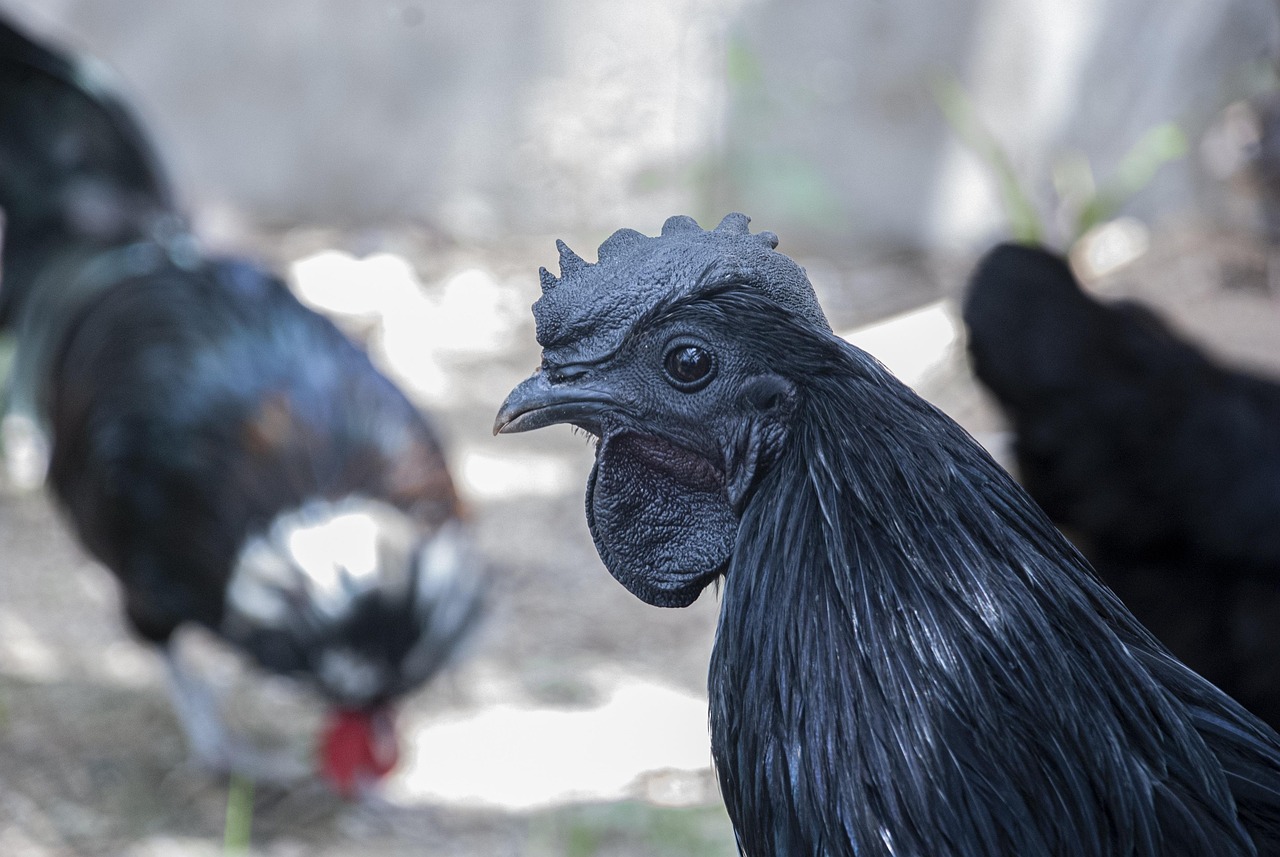
A slow-grown native bird has an immune system that has had months to develop, on open ground, exposed to the ordinary organisms it will meet anyway. A bird pushed to weight in six weeks has not had that time.
Vaccination still matters and we do it properly — Marek's on day one at the hatchery, then Ranikhet and Gumboro on schedule. Vaccines are not antibiotics. They prime the bird's own immunity rather than substituting for it.
What we do when a bird is actually ill
We treat it. If a bird needs an antibiotic to survive, withholding it would be cruelty, not principle.
What that bird does not do is enter the food chain as one of ours. It is separated, treated, and kept out. The promise is that we do not use antibiotics routinely — as a growth aid or as insurance against overcrowding — not that we would let an animal suffer to protect a claim on a website.
Why it is worth it
Antibiotic resistance is not a distant problem, and a large share of the antibiotics used worldwide go into livestock rather than people. Every farm that stops using them routinely is a small amount of pressure taken off drugs that human medicine still needs.
The food is better too. But that is the secondary reason, not the first one.
Questions about any of this?
Ask us on WhatsApp